


Bucatini
Butter, Delbocia
Pecorino, grated
Black pepper, freshly cracked
Reserved pasta cooking water
250g
120g
80g
1 tbsp
1 Cup
Method
Whip up a perfect Cacio e Pepe sauce with LaManna’s expert tips:
- Bring a large pot of salted water to the boil. Add the bucatini and cook until al dente.
- Reserve a cup of pasta water to add to LaManna’s fresh Pecorino and butter. This starchy and salty liquid binds the ingredients into a glossy, creamy sauce.
- Take the pasta off the heat before adding Pecorino for a silky and creamy texture with no clumps.
- Add the cheese, pasta water and toss continuously until you see it coming together.
- Add cracked black pepper to LaManna’s fresh bucatini as the finishing touch for a tasty Cacio e Pepe. Start with a full tablespoon, toast it until fragrant, and adjust for warmth and bite.
Why Bucatini is Perfect for Cacio e Pepe
Your choice of pasta makes all the difference when making Cacio e Pepe.
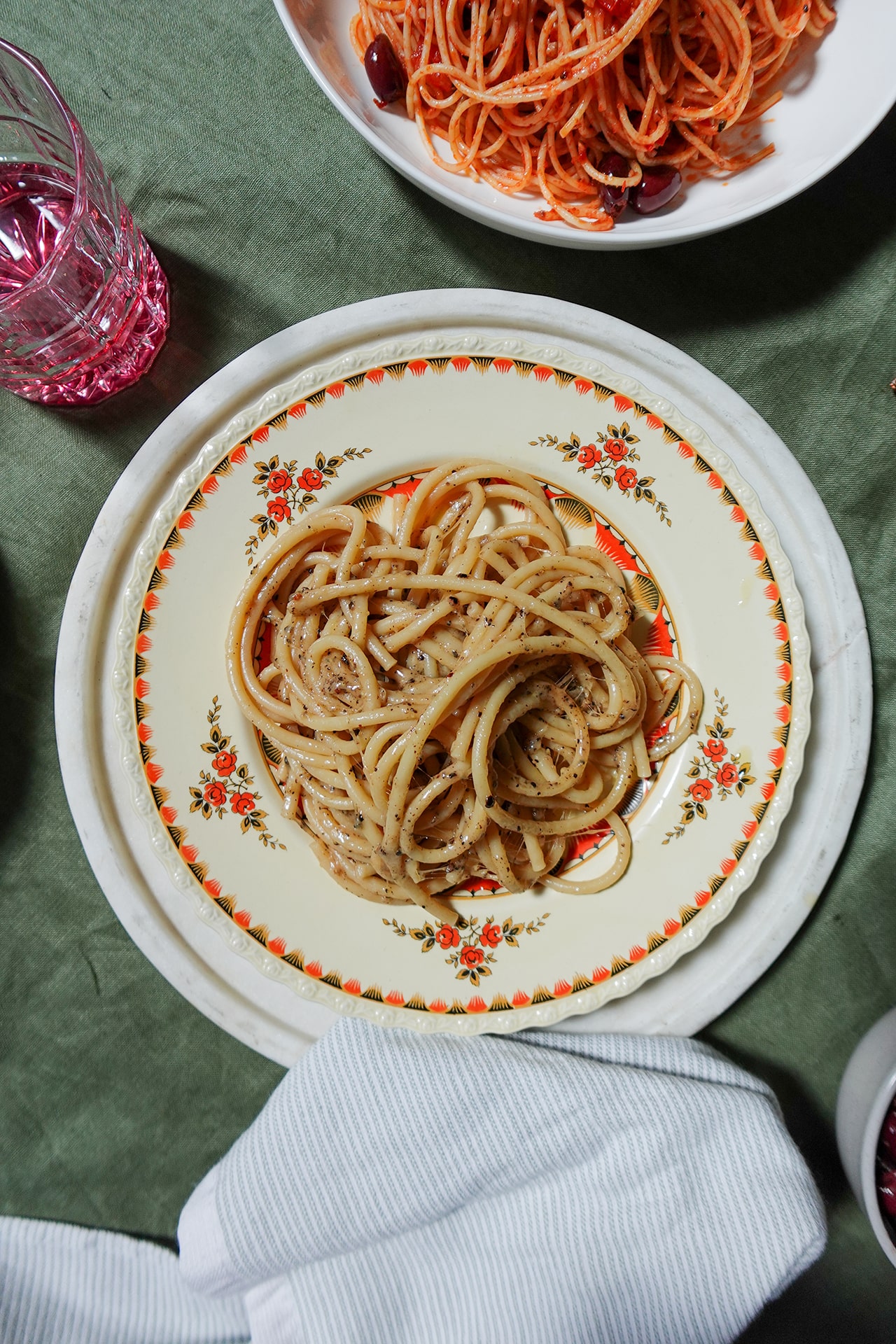
We recommend fresh bucatini from LaManna for this Roman classic dish because its hollow centre soaks in the creamy Pecorino cheese and butter sauce, coating every forkful perfectly. Bucatini looks like spaghetti, but its ability to embrace the sauce makes it the better choice. Where spaghetti coats the outside, and tonnarelli grips the sauce with its rough edges, bucatini in the Cacio e Pepe recipe does both, delivering that rich, peppery flavour in every mouthful.
This kind of detail turns a classic pasta recipe into a family favourite.
What To Serve With Cacio E Pepe
Bucatini Cacio e Pepe needs little help to make a big impact at the dinner table! A simple green salad, some roasted broccolini, or a glass of crisp Pinot Grigio is enough.
Let LaManna’s bucatini and Pecorino impress your family instead.
About this recipe
What does “cacio e pepe” mean?
Cacio e pepe translates to “cheese and pepper” in Italian, a name that perfectly describes this simple yet flavorful pasta dish from Rome.
What pasta works best for cacio e pepe?
Bucatini is a classic choice, but spaghetti or tonnarelli also work beautifully. The key is using a pasta that holds the creamy sauce well.
How do you stop the cheese from clumping?
The trick is to add the Pecorino off the heat and toss quickly with pasta water. This helps create a smooth, emulsified sauce instead of clumps.
Can I use Parmesan instead of Pecorino?
Traditionally, cacio e pepe is made with Pecorino Romano, which has a sharper, saltier flavor. Parmesan can be used if needed, but the taste will be milder.
Is butter traditional in cacio e pepe?
Classic Roman recipes rely only on Pecorino, pasta water, and pepper. Butter adds richness and helps emulsify the sauce, making it easier to achieve a creamy texture at home.
How spicy is this dish?
The heat comes only from freshly cracked black pepper. You can adjust the amount to suit your taste.
What should I serve with cacio e pepe?
This pasta is rich, so it pairs well with a simple green salad, roasted vegetables, or a crisp white wine like Pinot Grigio.
Can I make cacio e pepe ahead of time?
It’s best enjoyed fresh, as the sauce can thicken or separate if reheated. However, you can prep the ingredients in advance for quick cooking.