


Olive oil
Butter
Shallots, peeled
Garlic, peeled & minced
Tomato paste
Chilli paste, Bippi
Vodka
Thickened cream
Salt
Parmigiano Reggiano, grated
Pasta water
Rigatoni, dried
Fresh basil leaves
2 Tbsp
1 Tbsp
2 Med
3 Cloves
1/2 Cup
1-2 Tbsp
1/2 Cup
1 Cup
To taste
1 Cup
1/2 Cup
500g
1/4 Bunch
Method
- Cook the pasta – Bring a large pot of well-salted water to the boil. Cook the rigatoni according to packet instructions until al dente. Just before draining, reserve ½ cup of the pasta water – don’t forget this step, it’s what brings the sauce together at the end!
- Sauté the shallots & garlic – Add the roasted red peppers, thyme, oregano and parsley to the bowl.
- Add the tomato & chilli paste – Stir in the tomato paste & chilli paste (or dried chilli flakes, if using). Cook for 2–3 minutes, stirring often — this cooks out the raw tomato flavour and lets the paste caramelise slightly, deepening the colour and flavour of the sauce.
- Add the vodka – Pour in the vodka & let it bubble away for 2–3 minutes, until it’s reduced by about half & the raw alcohol smell has cooked off.
- Stir through the cream – Reduce the heat to low & pour in the thickened cream. Stir to combine & let it simmer gently for a few minutes until the sauce is smooth & slightly thickened.
- Finish with parmesan & serve – Take the pan off the heat & stir through the parmesan until melted & glossy. Season with salt to taste. Tear over fresh basil & serve immediately
About this recipe
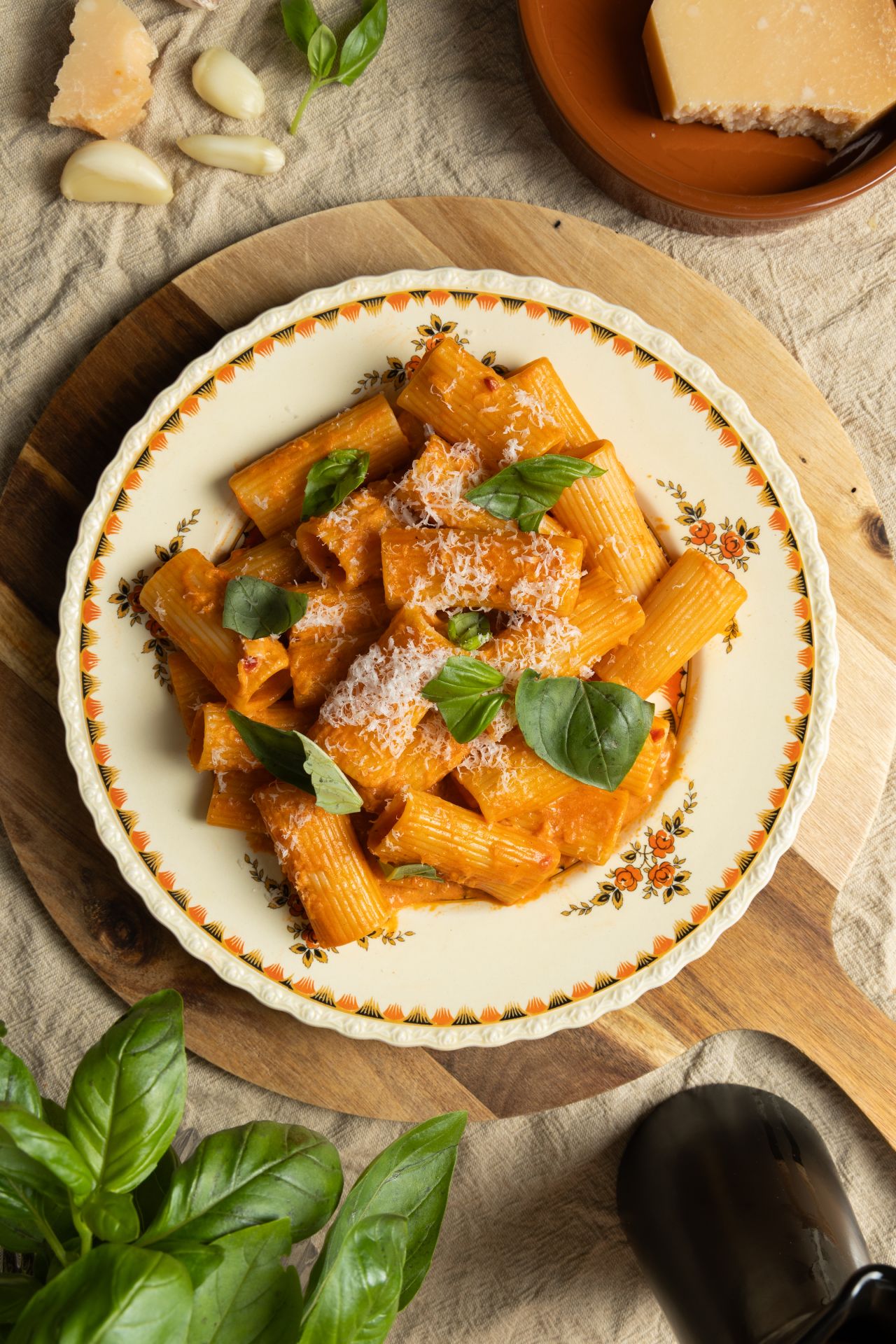
Vodka pasta (or pasta alla vodka) is one of those dishes that sounds fancier than it is. The sauce comes together in one pan while the pasta boils, and most of the work is just stirring and letting things reduce. The vodka sharpens the tomato flavour and helps the cream and tomato emulsify into something silky and rich that neither could do alone.
The Bippi chilli paste gives this version a slow, building heat that sits underneath the cream rather than hitting you up front. If you prefer less spice, start with one tablespoon and taste as you go.
Rigatoni is the ideal shape here because the ridges and wide tubes trap the creamy sauce in every bite, but penne rigate or paccheri work well too. If you’re building an Italian pasta night, start with something lighter like a Cacio e Pepe or a bold Spaghetti alla Puttanesca, then bring out the vodka pasta as the main event. For a creamier pairing, our Sausage and Greens Orecchiette uses the same cream-and-parmesan finish with a completely different flavour profile.
Browse more Italian recipes, or check out our World Pasta Day feature for five more easy weeknight ideas.
What does vodka do in vodka pasta?
The vodka serves two purposes.
It helps release flavour compounds in the tomato paste that aren’t soluble in water or fat alone, and it acts as an emulsifier that helps the cream and tomato blend into a smooth, cohesive sauce. The alcohol cooks off during the reduction, so the finished dish doesn’t taste of vodka, it just tastes richer and more balanced than a standard tomato cream pasta.
Can you make vodka pasta without vodka?
You can leave the vodka out and you’ll still get a good tomato cream pasta, but the sauce won’t have quite the same depth or silkiness.
What pasta shape is best for vodka sauce?
Rigatoni is the classic choice because the ridged tubes hold onto the thick, creamy sauce. Penne rigate, paccheri and mezzi rigatoni all work well for the same reason.
How do you stop vodka pasta from being too spicy?
This recipe uses Bippi chilli paste for a slow, warm heat rather than a sharp chilli hit. Start with one tablespoon, taste the sauce after adding the cream, and add more if you want it spicier. The cream and parmesan both mellow the heat significantly, so the finished sauce is always milder than it tastes at the chilli paste stage.
Can you reheat vodka pasta?
Yes. Reheat it gently over low heat with a splash of water or cream to loosen the sauce back up. The sauce thickens as it cools because the parmesan sets, so adding a little liquid brings it back to the right consistency.
Avoid microwaving on high as it can split the cream. Leftovers keep well in the fridge for up to two days.