


Egg linguine
Brown onion, finely sliced
Fennel bulb, finely sliced
Garlic cloves, finely sliced
Anchovy fillets
Saffron
Extra virgin olive oil
King prawns, peeled (keep 4 unpeeled)
Rockling, skinless
Wild-caught calamari
Tomato passata
Parsley, chopped
Lemon
Butter, cubed
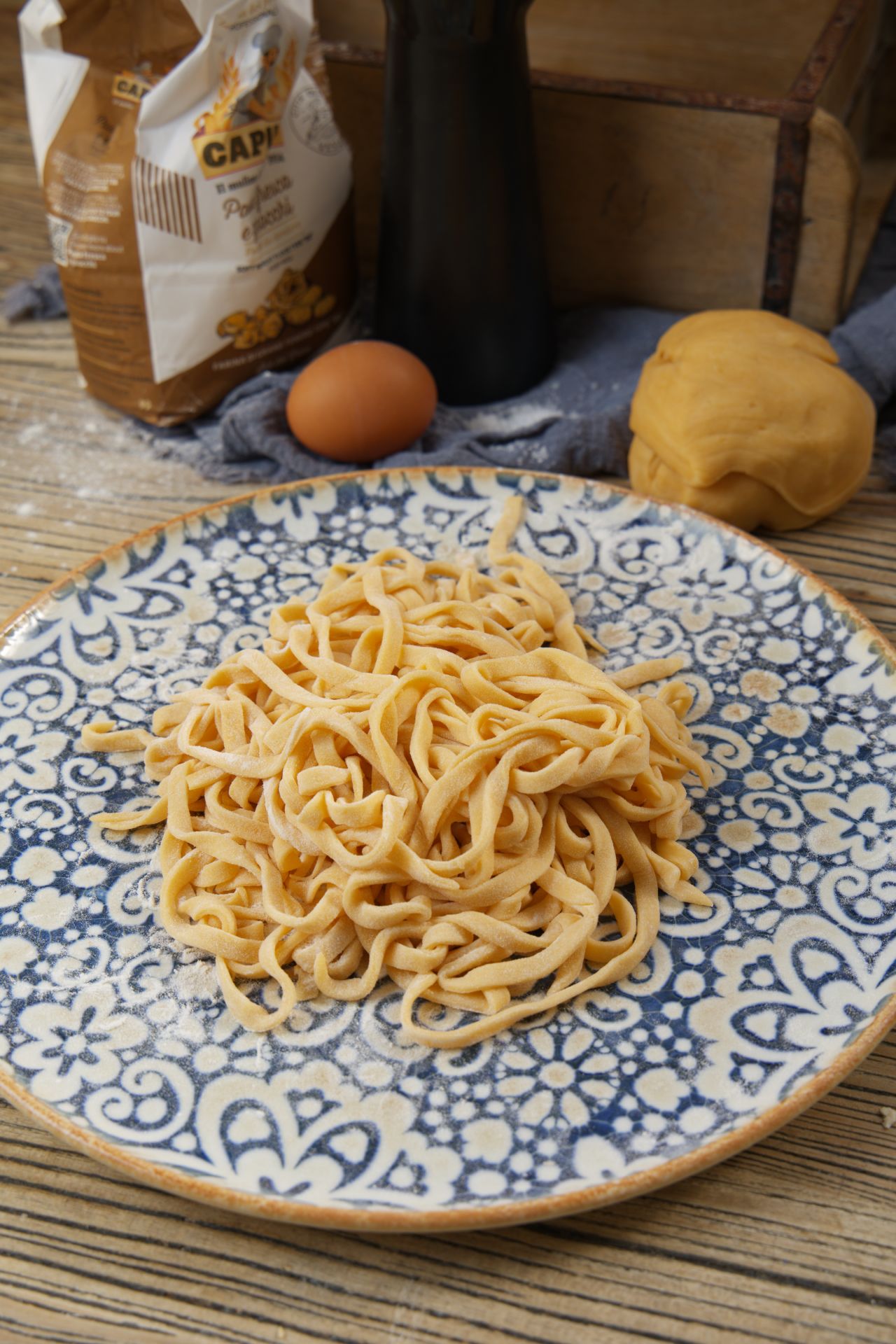
600g
1 Medium
1
2 Cloves
2
1g
250ml
200g
200g
200g
200ml
1/2 Bunch
1
80g
Method
For the soffritto base
- Finely slice the brown onions and fennel bulbs. Thinly slice the garlic cloves.
- Heat the olive oil in a large heavy-based pot over low heat.
- Add anchovy fillets and gently cook, stirring, until they fully dissolve into the oil.
- Add the onions, fennel and garlic to the pot.
- Cook very slowly over low heat, stirring regularly, allowing the vegetables to soften without colouring.
- Once the oil starts to bubble, immediately remove it from the heat.
- Add the saffron, stir well, then allow the soffritto to cool naturally so the saffron can fully infuse.
Garnish
- Take the 4 un-peeled King prawns & thread lengthways onto a skewer to keep it straight during cooking.
- Lightly season with salt and brush with a small amount of olive oil.
- Heat a grill pan or flat plate over medium-high heat.
- Cook the prawn for 1–1½ minutes per side, until just opaque and lightly caramelised.
- Remove from heat immediately to avoid overcooking, set aside until pasta is ready to plate.
To finish
- Bring a large pot of well-salted water to the boil.
- Cook linguine as per packet instructions or until al dente.
- Drain, reserving a small amount of pasta water.
- Heat a wide pan over medium heat and add the prepared soffritto.
- Add the rockling and calamari to the pan and cook gently for 1–2 minutes.
- Add the peeled prawns and cook until just opaque.
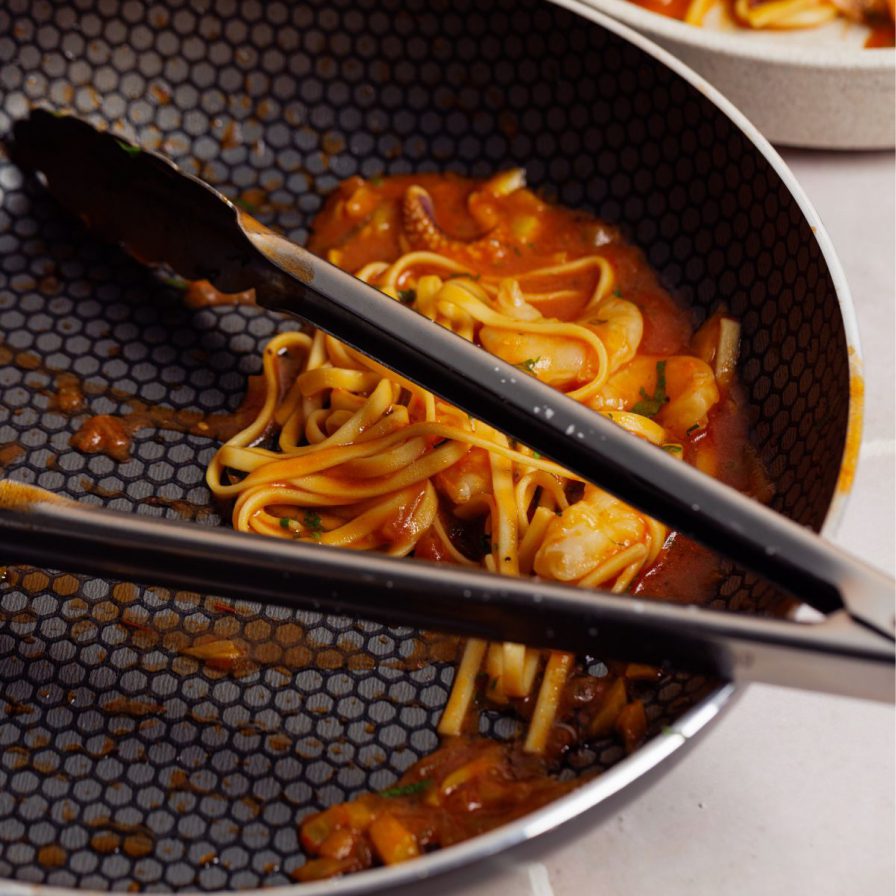
- Stir through the Napoli sauce and bring to a gentle simmer.
- Add the cooked linguine to the pan, tossing to coat. Loosen with a little reserved pasta water if needed.
- Finish by stirring through the butter until the sauce becomes glossy and emulsified.
- Remove from heat and add lemon zest and chopped parsley, seasoning to taste.
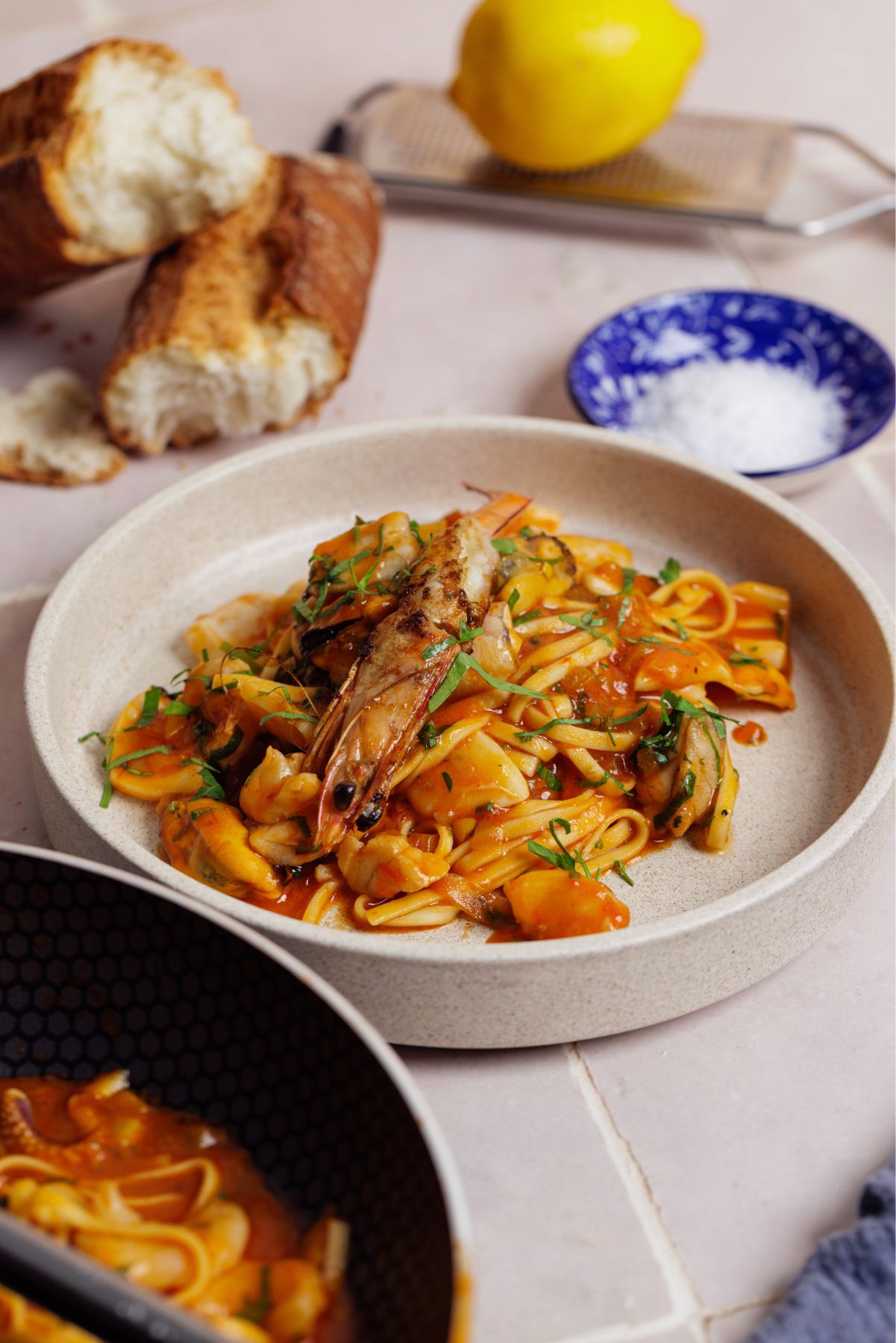
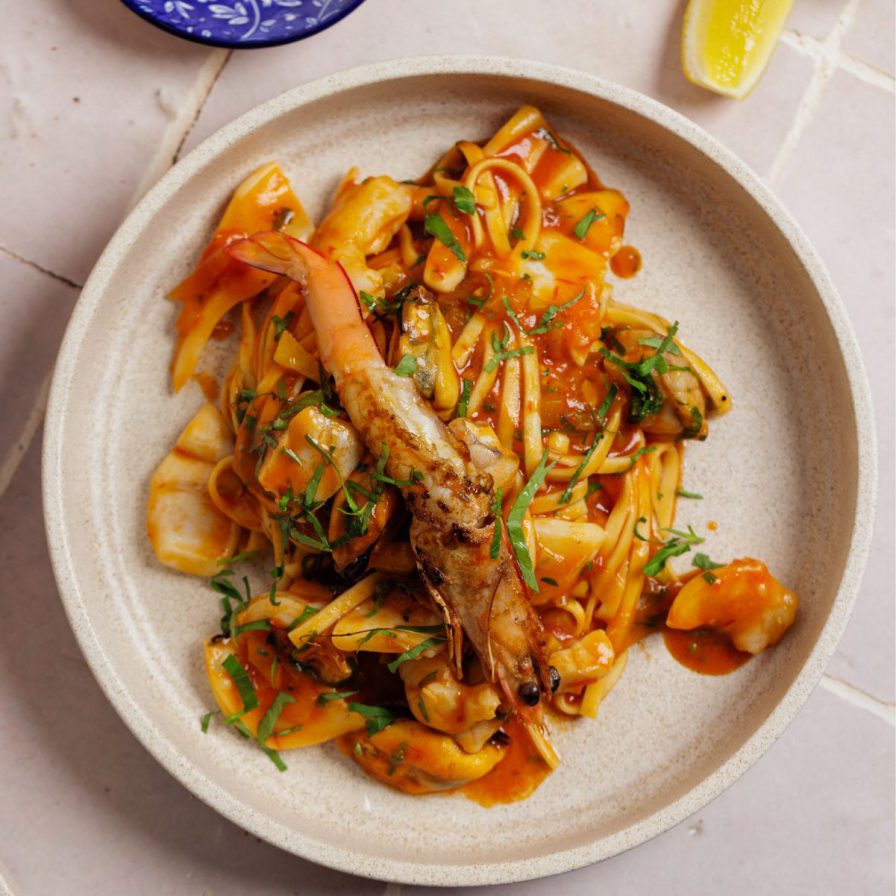
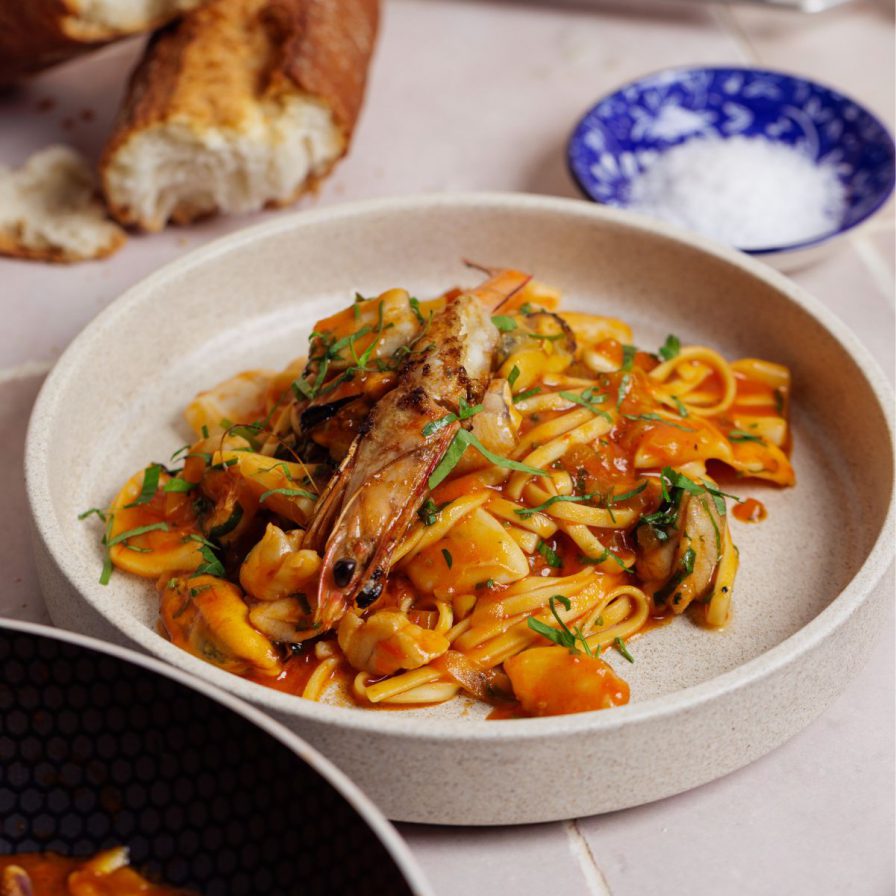
- To garnish, remove grilled King prawns from the skewer and lay them on top of each serving of pasta.
About this recipe
This Seafood Linguine follows classic Italian technique, letting high-quality seafood and a well-made soffritto do the work rather than relying on cream or excess sauce. If you enjoyed this recipe, you’ll love our simple spaghetti marinara recipe!
Can I prepare this seafood linguine recipe ahead of time?
You can prepare the soffritto in advance, but for the best results, cook the seafood and pasta just before serving.
What makes this seafood linguine different from other recipes?
This seafood linguine recipe uses a slow-cooked soffritto and saffron for depth, instead of cream, allowing the flavour of the seafood to remain the focus.
What seafood works best in seafood linguine?
Firm white fish, calamari and prawns are ideal for seafood linguine because they cook quickly and stay tender when handled gently.
Can I use dried or fresh pasta?
Both work. Dried linguine gives a classic texture, while fresh pasta will cook faster, so add it to the sauce accordingly.
How do I avoid overcooking the seafood?
Cook everything gently and in stages, removing the pan from heat as soon as the seafood turns opaque and tender.
What pasta shape is best for a seafood linguine recipe?
Linguine is ideal because its flat shape holds the sauce well without overwhelming the seafood.
Is seafood linguine traditionally made with cream?
No. Classic Italian seafood linguine is typically tomato-based or oil-based, keeping the dish light and letting the seafood shine.